Friday, November 1, 2013

Michael Carroll

MICHAEL CARROLL  
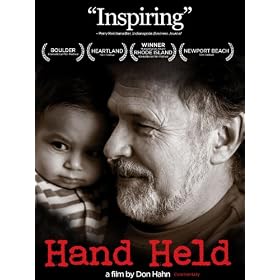
Michael Carroll originally went to Romania in January 1990, which was four weeks after the fall of the Ceausescu regime. He is a professional photographer and for his first assignment in the country, he had to document the way that aids was being delivered and spread in Ceausescu Romania. The story that he captured with his cameras and handheld, shows scenes and images of unimaginable neglected, sick, and malnourished children living in tight and unhealthy conditions in hospitals/orphanages. These orphanages were under-equipped with medicine and supplies, and ran by undereducated "nurses" and volunteers who were unable to give the overwhelming number of abandoned children the attention and proper treatments that they needed. Each nurse was only given two needles, in which they did not have anything to decontaminate them with, so the number of children with AIDS spread rapidly. When Michael Carroll  published his story and images in The Boston Globe, this caused  hundreds of phone calls from New Englanders who were more than willing to help these children. This group of men and women came together to form Romanian Children’s Relief (RCR), which sent its first shipment of medical supplies and toys to Bucharest in  1990. Later there was a movie published about his story called Hand Held by Don Hahn.
Romanian Children's Relief or FundaĊ£ia InocenĊ£i, is an organization that is "non-profit, non-governmental and with no political or religions affiliation, dedicated to help Romanian children and their families without any discrimination". The RCR is ran by 31 professional employees, more than 100 volunteers, $302000 budget, and 7 running programs. This organization was founded in 1998 and is still successful today. The Romanian Children's Relief /Fundatia Inocenti is not an adoption agency or religiously based. This organization was founded by Michael Carroll after he was personally affected by the children when he was assigned there to photograph an report the conditions for the Boston Globe.


Friday, October 18, 2013

Post Assignment: Shutter Speed

3.) The steps I took to take my photos for the shutter speed assignment was first I had to pick a subject to capture. The subjects I chose were classmates jumping and papers being thrown by them, along with some nature in motion (leaves falling). Than, I had to adjust the shutter speed so that I was able to capture the objects in motion without the photo coming out blurry or out of focus.
4.) What I liked best about my images for this assignment was that it looked like the subjects I was photographing were floating, they did not look like the object was moving. I thought it was interesting to see how a camera could take a photo that quickly and not have it come out blurry like it does on previous cameras I have used or my iphone.
5.) Some trouble that I had during this assignment was at first I had the wrong settings for the shutter so I kept missing the subject in motion and I would capture them when it was too late. So I had to adjust the shutter speed. Than I had to find the perfect place to have the right amount of lighting which is a problem because every time we went by the windows to get more sunlight, the images just came out darker so we had to go outside to get the correct lighting.

The purpose of this assignment was to capture a picture in motion by adjusting the shutter speed on the cameras. By adjusting the shutter speed, the camera can take quicker shots of a subject/object that is moving or in motion. The photos should not come out blurry or unclear if you have the correct settings set on the camera.

MARY ELLEN MARK
Mary Ellen Mark  was born March 20, 1940
She is known for her photojournalism, advirtising photography, and portraits
There are 16 collections in museums around the world featuring her art 
She was born in Philadelphia, Pennsylvania 
Began taking pictures with a box brownie camera when she was 9 years old
Spent time being a photographer on movie sets


1.) The purpose of the assignment this week is to capture things in motion. Such as capturing someone jumping or running or even a piece of paper falling. The pictures are not supposed to come out blury, they are supposed to be captured in motion.
2.) I plan on doing this assignment by photographing my classmates and different objects jumping outside and running down the hallway. Also I plan on using other objects such as a leaf falling outside or papers being thrown up in the air. I hope to have the pictures come out clear, like the objects are floating or are still, not in motion.
3.) The first artist I chose this week was Walker Evans.
4.) The second artist I chose was Mary Ellen Mark.

Thursday, October 17, 2013

Pre-Assignment: Close up

1.) For this weeks assignment we have to take pictures of something close up. You have to adjust the settings on the camera so that when you take the picture it does not come out blurry or have too much light/not enough. The point of this assignment was to capture the small details of an object that you would not normally see from far away, but up close you can see the object from a different perspective. I plan to take pictures of objects with a lot of small details because I feel that they would reveal things that I never noticed before. Some inspirations I found were pictures on google of flowers and nature mostly, so when I take the pictures I plan to do the same.
2.) The artist of the week was Walker Evans. He was born in St. Louis, MO on November 3, 1903, and died on April 10, 1975 in Connecticut. Walker Evans is best known for his work with the Farm Security Administration, documenting the Great Depression.
3.) The second artist of the week is Mary Ellen Mark. She was born March 20, 1940 in Philadelphia, PA. Mary Ellen Mark is an American photographer who is known for her photojournalism, advirtising, and portraits.

Friday, October 11, 2013

3.) The steps I took to take the close up photos was first I looked for different objects, mostly nature, that had lots of tiny detail, making it easier to take close up photos of the small details. Then I took the pictures but it was difficult to find the right angle to capture the details, mostly in the flowers I photographed.
4.) What I like best about my images is that you can see all the small details that nobody really notices when they look at a flower, or a tree, or anything that you see every day.
5.) Some trouble I had taking the close up photos was if I did not gt the right angle of the object I was photographing then it would come out blurry or just not look right.

Wednesday, October 9, 2013

2.) What I was looking to create during this assignment was to take photos like Paul Strand and capture shadows.
3.) The steps I took to capture these images was I took my iphone camera and looked for places outside and inside with different lighting and shadows.
4.) What I like best about my images is that they are unique and have differnet light exposures. They don't look like everyone elses.
6.) Something I could improve about my photos was to take more and get different options on the ones I uploaded, maybe I would have found better ones.