Friday, November 8, 2013

BIG PROJECT
The Photograph
Graham Clarke 
About: Graham Clarke
Oxford University Press


Edward Weston
Edward Weston
About: Edward Weston, Masters Of Photography Aperture 
Konemann Verkags Gmbh and Aperture Foundation, Inc.

In Real Life 
Leslie Sills
About: Leslie Sills, Six Women Photographers
Library of Congress Cataloging-in-Publication data 

Berenice Abbott
Berenice Abbott  
About: Berenice Abbott, Masters Of Photography Aperture
 Konemann Verkags Gmbh and Aperture Foundation, Inc.

Alfred Stieglitz
Alfred Stieglitz
About: Alfred Stieglitz, Masters of Photography Aperture
 Konemann Verkags Gmbh and Aperture Foundation, Inc.

Ansel Adams
Ansel Adams 
About: Ansel Adams, In color
 Library of Congress Cataloging-in-Publication data


Ansel Adams
Ansel Adams 
About: Ansel Adams, Yosemite and the Range of Light
 Library of Congress Cataloging-in-Publication data

Mannequins
George Bennett
About: George Bennet, photos of mannequins 
Library of Congress Cataloging-in-Publication data

Black & White Photography
Henry Horenstein
About: Henry Horenstein, black and white photographs
Edwynn Houk Gallery, NY

August Sander
August Sander
About: August Sander, Masters of Photography Aperture
Konemann Verkags Gmbh and Aperture Foundation, Inc.

Manuel Alvarez Bravo
About:Manuel Alvarez Bravo

An American Seer
Dorothy Norman
About: Dorothy Norman, aperture biography
Aperture Foundation Inc.

Photography Reborn
Jonathan Lipkin
About: Making in the digital Era
Harry N. Abrams, inc.

Ansel Adams An Autobiography
Ansel Adams
About: Ansel Adams (life)
Ansel Adams Publishing Rights

This is the American Earth 
Ansel Adams& Nancy Newhall
About: Earth
Sierra Club-Ballantine Book

The Americans 
Robert Frank
About: Robert Frank, Americans
National Gallery Of Art, Washington

Robert Capa / Photographs
Robert Capa
About: Robert Capa
Henri Cartier-Bresson

Jerry Uelsmann
A.D Coleman
About: Jerry Uelsmann, Photo Synthesis
State University Florida

Eye Witness 
Richard Lacayo and George Russell
About: 150 Years of Photojournalism
The Time Inc. Magazine Company

The Legacy Of Josiah Johnson Hawes
Rachael Johnston Homer
About: 19th Century photographs of Boston 
Barre Publishers 1972


Monday, November 4, 2013

alfred stieglitz

ALFRED STIEGLITZ
MASTERS OF PHOTOGRAPHY APERTURE
I enjoyed this book because I liked the styles of photography it had inside. The photos in this book were different from Eyewitness because they were mostly very serious. In Eyewitness, the photographs I saw were, for the most part, happy and dramatic. The photos in this book however, are also very dramatic, but in a sad and depressing way. You can almost feel the emotion behind the peoples faces in the photos and I found it interesting how a simple picture can effect you so much. BY changing your emotions and opinions on the topic.

PRIVATE JOHN WINBURY SAYS GOODBYE TO HIS SON
A photo that effected me from this book was one by Robert Jakobsen from 1940. The name of this photo was Private John Winbury Says Goodbye To His Son. The story behind this picture was that this man was leaving to go to war in Hawaii and was saying goodbye to his son. The reason this story spoke to me is because I'm very close with my dad and I couldn't imagine what it would feel like to have to say goodbye to him, not knowing if he was going to come home again. The look on his son's face could make anybody feel sorry for him, especially at such a young age.


CHILD SPINNER
Another photograph that effected me was the Child Spinner by Lewis Hine from 1990. The back story of this picture is that Hine took detailed notes about child laborers he photographed. This one is from North Carolina, of a girl named Sadie Pfeifer who has worked in the factory for a year and a half. This is just one of many of the children who worked in the Lancaster cotton mills. This photograph is so simple but effective. It is simply a picture of a young girl working in a dirty looking factory at what looks to be a sewing machine, but it is so effective, it gets the point across to the reader right away that something is wrong. It is a dark photo and you can see that this young girls conditions in the factory are not great. This photo stood out to me because there is nothing special to it, but yet it sends a message. It makes you think of what it would be like to have been this young girl at that time. 


Friday, November 1, 2013

Eyewittness

EYEWITNESS

By: Richard Lacayo and George Russel
A photograph and artist I liked from Eyewitness was Marilyn Munroe by Matthew Zimmerman that was taken in 1954. The image was taken in New York City during her filming of The Seven Year Itch. I liked this picture from Eyewitness because it is a famous picture and is on many things, whether on posters, bags, clothing, etc... Its interesting to learn that Matthew Zimmerman took this picture because I never knew who he was, let alone that he took one of my favorite photos.

picture_1_2

Another photograph and artist I discovered in this book was called V-J Day In Times Square by Alfred Eisenstaedt on August 14, 1994. This is a picture of a sailor who grabs and kisses a pretty nurse as thousands of people jam into the streets of New York City to celebrate the victory over Japan. This photo has formed into the image of American relief after World War II ended. This is yet another one of my all time favorite photos because I've seen it so many times and I didn't even know it was taken in NYC or the back story of it. 
 

Michael Carroll

MICHAEL CARROLL  
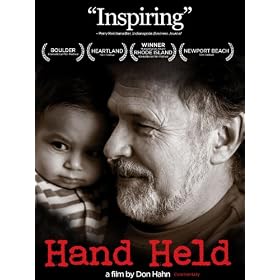
Michael Carroll originally went to Romania in January 1990, which was four weeks after the fall of the Ceausescu regime. He is a professional photographer and for his first assignment in the country, he had to document the way that aids was being delivered and spread in Ceausescu Romania. The story that he captured with his cameras and handheld, shows scenes and images of unimaginable neglected, sick, and malnourished children living in tight and unhealthy conditions in hospitals/orphanages. These orphanages were under-equipped with medicine and supplies, and ran by undereducated "nurses" and volunteers who were unable to give the overwhelming number of abandoned children the attention and proper treatments that they needed. Each nurse was only given two needles, in which they did not have anything to decontaminate them with, so the number of children with AIDS spread rapidly. When Michael Carroll  published his story and images in The Boston Globe, this caused  hundreds of phone calls from New Englanders who were more than willing to help these children. This group of men and women came together to form Romanian Children’s Relief (RCR), which sent its first shipment of medical supplies and toys to Bucharest in  1990. Later there was a movie published about his story called Hand Held by Don Hahn.
Romanian Children's Relief or FundaĊ£ia InocenĊ£i, is an organization that is "non-profit, non-governmental and with no political or religions affiliation, dedicated to help Romanian children and their families without any discrimination". The RCR is ran by 31 professional employees, more than 100 volunteers, $302000 budget, and 7 running programs. This organization was founded in 1998 and is still successful today. The Romanian Children's Relief /Fundatia Inocenti is not an adoption agency or religiously based. This organization was founded by Michael Carroll after he was personally affected by the children when he was assigned there to photograph an report the conditions for the Boston Globe.